Thursday, April 29, 2010

Wednesday, April 28, 2010
Lack of Responsibility
In the story Frankenstein Victor was an a person who didn't man up to his responsibility and in Just like the king Louis and Queen wife Lack of responsibility lead to war. Although in the Novel Frankenstein it wasn't actually war but it was very alike. The lack of support to the creation thats Victor created lead his creation to evil actions. He wasn't responsible enough or man enough to take control of his mistake and that is what caused his creation to do such bad and evil deeds such as murders. Like the king and the Queen the had such highly standards and spending habits that they put they people in so much debt and couldn't responsibility take fault to it instead they punished and made others pay for the mistakes and selfishness. The King and Queen are so much Like Victor Frankenstein they put France into so much but didn't even attempt to help instead the made it worst for there people. These affluent people just thought about there selfs and their kind at no time they thought of people different from them. Like Victor he couldn't even stand to look at his creation just because he didn't look like him and he wasn't like a average human he abandon him thats just how the French Revolution went the abandon there people.
Simularties Frankenstein and the French Revolution

The setting of the story Frankenstein symbolically demonstrates many situations that took place durning the time of the French Revolution. However Frankenstein by Mary Shelley was publish in 1818 and the French Revolution start around the 1780's I still affected peoples emotion and still does until this day. During the French Revolution there was a lot of dramatic chaos and very unpleasant selfishness going on. The king and Queen treated the poor people very unfairly by taxing them with such high prices they couldn't afford. Similar to novel Frankenstein the 'monster' Victor created was not wealthy and normal as Victor and the people in his town, he was treated very bad and unaccepted by the people. Like during the French Revolution just because the people where poor they treated them in such horrible ways. In the Novel and during the French revolution people are very interested in place value and class also appearance, they didn't accept everyone or treat people equally they mistreated people for all the wrong reasons.
Monday, April 5, 2010
Politics vs. Frankenstein
"Politics and the novel Frankenstein by Mary Shelley have many points in common. Power is something that many people strive for or simply desire. The novel portrays that having power is of great importance. Without strength, Frankenstein couldn’t have played God and the creature wouldn’t have killed innocent humans just like George Bush wouldn’t have created wars in Iraq and Afghanistan. Politicians and government are meant to keep things under control, but sometimes end up by doing more harm than good. Currently, the opinion of some members of society is that most politicians are power-hungry monsters. Power is needed to control and organise society. Without a superior control, there would be no economy, no laws and poor safety. In Frankenstein, Victor used his power to help mankind by furthering scientific knowledge. He discovered a much wanted secret - the secret to life. Frankenstein’s issue of parenting became a great obsession with power."
Victor framkenstein clearly understood that the creature that he created was not going to be accepted in the society that he lived in because of the fact that he is "non-human" and he does not neccesarily have the same motives as humans do. This relates to the era of the french revolution because during that time period, women had very little or no oppurtunities in most workings fields. Their freedom was very limited, just like the monster. Mary Shelley relates most of her novels to her experience that she has had in her past, and Frankenstein is a great example because it relates to the pleasure and pain an individual can have.
Liberty, Equality & Fraternity

However do to research they state that the state goals were "liberty, Equality & Fraternity" was the principal and the thinking of the King and Queen of France Louis XVI and his wife Marie Antoinette these two are the reason for the revolution. I don't understand how in the word the wanted "Liberty, Equality & Fraternity" when they were greedy selfish and spending money that wasn't theirs. Especially the Queen Marie Antoinette. She was very flashy and self center there was so much poverty going on in France and lack of food. ( http://www.victorianweb.org/history/hist7.html )
People were not able to eat and instead of helping these two took from them buy spending tremendously. They people then decided to put this royal family to an end. Which caused so much violence in French. The king raised up the taxes so high so he can get out of his problems and taxed the peasants the most. Mean while the wealthy people didn't have to pay taxes can you imagine such thing. The people who didn't have it or had lil had to give what they had or go out and get it some how which lead to all the madness. If you ask me it doesn't make any sense what so ever to tax people who are poor. The people they were supposed to tax are the rich people. There was so much violence going on during that time. Which can compare to the story Frankenstein. The creator that Frankenstein created later became violent. After being neglected and treated unfair. I believe when people are treated bad or not rite they will do all in their power to gain respect. Although violence isn't the best way out of things sometimes it does prove to others that you are willing to do what ever and they will not get away with taking advantage of you. Both the French Revolution and Frankenstein are similar in many ways.
Summary
During the French Revolution so much was going on in the french society. The people were being treated very unfair according to my research everyone was getting taxed very high amounts that one couldn't afford. The France's Financial Crisis started from 1783 to 1788 France participates in the seven years of war which leads then to an extreme dept. King Louis XVI was one of the French kings who caused one of the major drastic debts and was never able to fix our get out of it, his and his wife spending habit was out of the norm. The man who controlled all of the kings situations believe that the only way out was by taxing so highly but how ever he was wrong. It was an abuse to the people the taxation was so unfair the people were anger which lead to all this commotion that lead to the wars and revolutions. The frech Revolution occurred almost 20 years after the American Revolution.
Sunday, March 28, 2010

When reading Frankenstein by Mary Shelley, one cannot help but notice that the women characters seem to have little matter compared to the men. This may have been caused by the time period in which she wrote: one in which females was considered to be inferior to males also known as the time of feminism.The book has three main narrators: Robert Walton, Victor Frankenstein, and Frankenstein's monster. The females play very weak characters in this novel.
"Frankenstein is riddled with passive female characters who suffer throughout the novel. Not one female character throughout the novel ever exhibits behavior outside of the submissive and reactive female role. Elizabeth, Victor's love, dies at the hand of the male monster while waiting for Victor to come rescue her. Elizabeth is not able to do anything to defend herself without the help of a man. She meets her demise while waiting, like a princess in a tower, for Victor to save her. Justine is put to death for a murder that the monster committed. She is unable to defend herself and prove her innocence against her accusers and dies for it. Justine is a victim of circumstance, but her passive role leaves her helpless to make her own destiny and defend herself against the false accusation."
"When reading Frankenstein by Mary Shelley, one cannot help but notice that the women characters seem to have little substance compared to the male characters. This may have been caused by the time period in which she wrote: one in which females were considered inferior to males. This difference between the sexes can be looked at using a variety of different perspectives."

When Mary Shelley wrote Frankenstein, the scientific revolution had already changed the face of Europe and was beginning to fuel the industrial revolution. In the story, Victor combined both ancient sciences, like the writings of Cornelius Agrippa, Albertus Magnus, and Paracelsus, with the new sciences such as chemistry and anatomy, which had been pioneered by men like Andreas Vesalius and William Harvey. Victor exclaimed, “None but those who have experienced them can conceive of the enticements of science. In other studies you go as far as others have gone before you, and there is nothing more to know; but in a scientific pursuit there is continual food for discovery and wonder”. With this statement, Shelley shows some of the feeling of contempt for science because it delved into the unknown and often changed basic beliefs held in the world.
Frankenstein also reflects the industrial revolution’s effect on Europe, primarily the working class’s appeals for suffrage and other rights. The industrial revolution spawned the creation of large factories with wealthy owners and a poor working class. In the 1780’s, for example, steam machines were set up to make yarn and by 1800 factories could make cloth. In 1820 textiles were the top industry in Britain. However, these advances in technology also led to a working class with long hours and very low wages. Women were paid half wage and children that worked were paid a quarter wage. This led to the development of labor unions and working class demands for voting rights and a less demanding labor environment.
Frankenstein also reflects the industrial revolution’s effect on Europe, primarily the working class’s appeals for suffrage and other rights. The industrial revolution spawned the creation of large factories with wealthy owners and a poor working class. In the 1780’s, for example, steam machines were set up to make yarn and by 1800 factories could make cloth. In 1820 textiles were the top industry in Britain. However, these advances in technology also led to a working class with long hours and very low wages. Women were paid half wage and children that worked were paid a quarter wage. This led to the development of labor unions and working class demands for voting rights and a less demanding labor environment.
In my opinion, i think that Mary Shelley used the hardships and changes of the scientific and industrial revolution to create such a fascinating story of Frankenstein. In the story, many aspects of this era relate to it.
Saturday, March 27, 2010

Mary Shelley wrote Frankenstein during the times of the French Revolution and it affected her way of writing because she connected the story a lot to that era.
"Imperialism has been the most powerful force in world history over the last four or five centuries, carving up whole continents while oppressing people and their entire civilizations. When not ignored outright, the subject of imperialism has been sanitized, so that empires become commonwealths, and colonies become territories or dominions (or, as in the case of Puerto Rico, commonwealths too). Imperialist military interventions become matters of national defense, national security, and maintaining stability in one or another region. In this book I want to look at imperialism for what it really is".
http://www.michaelparenti.org/Imperialism101.html
"Imperialism occurs when a strong nation takes over a weaker nation or region and dominates its economic, political, or cultural life.
This type of foreign policy was practiced by European nations and Japan throughout the 1800s and early 1900s. In every case, a nation would experience industrialaztion prior to practicing imperialism on a foreign nation or region. This was due to the nearly insatiable demand for cheap raw materials and the need for markets to buy manufactured goods".
http://regentsprep.org/regents/global/themes/imperialism/index.cfm
Thursday, March 25, 2010

Overseas territories linked to Great Britain in a variety of constitutional relationships, established over a period of three centuries. The establishment of the empire resulted primarily from commercial and political motives and emigration movements; its long endurance resulted from British command of the seas and preeminence in international commerce, and from the flexibility of British rule. At its height in the late 19th and early 20th cent., the empire included territories on all continents, comprising about one quarter of the world's population and area. Probably the outstanding impact of the British Empire has been the dissemination of European ideas, particularly of British political institutions and of English as a lingua franca, throughout a large part of the world. In the 18th century the British took Gibraltar, established colonies along the Atlantic seacoast of North America and in the Caribbean Sea, and began to add territory in India. With its victory in the French and Indian War, the empire secured Canada and the eastern Mississippi Valley and gained supremacy in India. Britain went on to control the Suez Canal. In the 19th-century European partition of Africa, Britain acquired Nigeria, Egypt, the territories that would become British East Africa, and part of what would become the Union (later Republic) of South Africa. Britain gradually evolved a system of self-government for some colonies after the U.S. gained independence, as set forth in Lord Durham's report of 1839.
In my opinion, the British Empire was such a powerful and influencing era that impacted countries all over the globe. It also was a shaping manner. The British Empire had a massive impact on the history of the world. It is for this reason that this site tries to bring to life the peoples, cultures, adventures and domination that made the Empire such a powerful institution. http://www.answers.com/topic/british-empire
Monday, March 22, 2010
Society's relations with Mary shelly's ideas of frankenstein

Throughout life, Mary shelley developed an understanding of the cruelty and tyranny that may be inherent in human institutions and the social and political establishment, and this is echoed in Frankensteins many critical comments on human society and individual behaviour during his conversation with Frankenstein. The monster can be seen as a type of the outsider, a creature who is regarded as inferior and for whom society has no place, just as slaves were denied any sense of individuality.The monster as representative of the mob
In a less positive way, the monster can also be seen as representative of a dangerous force. For all her passion for reform and her hatred of the despotic Tory elite in England, like many other middle-class writers Mary Shelley was anxious about the possibility of revolutionary mob violence. It was argued that, once people began to act collectively in this way, individual differences and moral scruples disappeared and the crowd was likely to commit atrocities that few of its members would tolerate as individual. From this point of view, the monster represents a dangerous, uncontrollable and unappeasable force at loose in society.
In a less positive way, the monster can also be seen as representative of a dangerous force. For all her passion for reform and her hatred of the despotic Tory elite in England, like many other middle-class writers Mary Shelley was anxious about the possibility of revolutionary mob violence. It was argued that, once people began to act collectively in this way, individual differences and moral scruples disappeared and the crowd was likely to commit atrocities that few of its members would tolerate as individual. From this point of view, the monster represents a dangerous, uncontrollable and unappeasable force at loose in society.
Thursday, March 18, 2010
French revolution
The French Revolution Began in France during the late 16 century, 1789 and ended in 1799. The Revolution started because the people believed that the government and the king were treating the peasants very unfair. Charging them a large amount of taxes that they weren't able to afford and forcing them to fight in the army. They had to pay the higher people for living in their area of the richer people. The wealthy people didn't have to pay high price taxes only the peasant.

The church was even receiving a percentage of their income. According to http://project1.caryacademy.org/1851/frenchrevolution.htm this all started with the country stating that king Louis and his wife has put them in debt. Which lead to the country going against their own goverment.
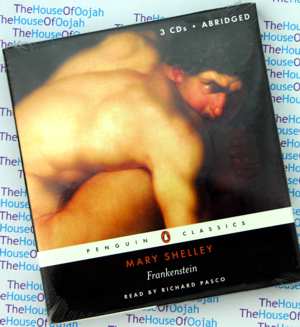
The story Frankenstin has many similarites to the French revolutions because the novel was writen and pulished in Londan were the revolution accured it was acctually publish in the year 1818 rite after the war. The novel is based on a man who learns how to use science to the next level and creates something that looks human but has a lot more advantage over people for example he is much bigger, learns quicker and was mad instantly. Some people say that the thing that Victor made was a monster but I don't really know yet for sure until i continue reading. However I believe that the goverment during the french revolutions was like the monster that was created do to the treat me they gave their country. This is a picture i got off the web that is supposed to be the thing victor created

The church was even receiving a percentage of their income. According to http://project1.caryacademy.org/1851/frenchrevolution.htm this all started with the country stating that king Louis and his wife has put them in debt. Which lead to the country going against their own goverment.
The story Frankenstin has many similarites to the French revolutions because the novel was writen and pulished in Londan were the revolution accured it was acctually publish in the year 1818 rite after the war. The novel is based on a man who learns how to use science to the next level and creates something that looks human but has a lot more advantage over people for example he is much bigger, learns quicker and was mad instantly. Some people say that the thing that Victor made was a monster but I don't really know yet for sure until i continue reading. However I believe that the goverment during the french revolutions was like the monster that was created do to the treat me they gave their country. This is a picture i got off the web that is supposed to be the thing victor created

Monday, March 15, 2010
French Revolution
According to http://www.wsu.edu/~delahoyd/frank.comment1.html Frankenstein is that it represents and almost foreshadows the romantic disillusionment with the established order. After the French Revolution, liberalism and nationalism were at all time highs. But with the response by the monarchies (e.g., the wars of 1848), romantic ideals were spurned. The effect this had was an increase in disillusionment among romantics.
The possibility of a society transformed by individuals seemed less believable. Mary Godwin suffered from this disillusionment, but for different reasons. In his essay on Frankenstein, George Levine discusses the dream Godwin had which inspired the book: "The dreams emerge from the complex experiences that placed young Mary Shelley, both personally and intellectually, at a point of crisis in our modern culture, where idealism, faith in human perfectibility, and revolutionary energy were counterbalanced by the moral egotism of her radical father, the potential infidelity of her husband, the cynical diabolism of Byron, the felt reality of her own pregnancy, and a great deal more" (Levine 4). The overwhelming reality of Godwin's life was similar to the harsh reality going on in Europe's political events.

The possibility of a society transformed by individuals seemed less believable. Mary Godwin suffered from this disillusionment, but for different reasons. In his essay on Frankenstein, George Levine discusses the dream Godwin had which inspired the book: "The dreams emerge from the complex experiences that placed young Mary Shelley, both personally and intellectually, at a point of crisis in our modern culture, where idealism, faith in human perfectibility, and revolutionary energy were counterbalanced by the moral egotism of her radical father, the potential infidelity of her husband, the cynical diabolism of Byron, the felt reality of her own pregnancy, and a great deal more" (Levine 4). The overwhelming reality of Godwin's life was similar to the harsh reality going on in Europe's political events.
Thursday, March 11, 2010
divine creative activity
Sheila Moinian
The French Revolution (1789–1799) was a period of radical social and political upheaval in French and European history. The absolute monarchy that had ruled France for centuries collapsed in three years. French society underwent an epic transformation as feudal, aristocratic, and religious privileges evaporated under a sustained assault from liberal political groups and the masses on the streets.
http://en.wikipedia.org/wiki/French_Revolution
Mary Shelley does not believe in the benefits of the revolutionary representation for women because it’s all male based and Frankenstein is relatable to this issue.
Mary Shelley shows us readers that Frankenstein’s character is very powerful and has the gift to persuade others with anything. In the French Revolution, people believed in "divine creative activity”.
Dr. Frankenstein states, "The world was to me a secret which I desired to divine". Yet as soon as he achieves his goal of creating life, he rejects all responsibility and his life becomes a living hell. Through this example, Mary Shelley is pointing out the dangers of "overreaching." Part of the tragedy Shelley describes is how Frankenstein spends much of his time running away from his monster. But why did he reject his creation?
http://www.wsu.edu/~delahoyd/frank.comment1.html
The French Revolution (1789–1799) was a period of radical social and political upheaval in French and European history. The absolute monarchy that had ruled France for centuries collapsed in three years. French society underwent an epic transformation as feudal, aristocratic, and religious privileges evaporated under a sustained assault from liberal political groups and the masses on the streets.
http://en.wikipedia.org/wiki/French_Revolution
Mary Shelley does not believe in the benefits of the revolutionary representation for women because it’s all male based and Frankenstein is relatable to this issue.
Mary Shelley shows us readers that Frankenstein’s character is very powerful and has the gift to persuade others with anything. In the French Revolution, people believed in "divine creative activity”.
Dr. Frankenstein states, "The world was to me a secret which I desired to divine". Yet as soon as he achieves his goal of creating life, he rejects all responsibility and his life becomes a living hell. Through this example, Mary Shelley is pointing out the dangers of "overreaching." Part of the tragedy Shelley describes is how Frankenstein spends much of his time running away from his monster. But why did he reject his creation?
http://www.wsu.edu/~delahoyd/frank.comment1.html
Frankenstein and the french revolution
Frankenstein has many different aspects in life that it realtes its story to. One major topic is the French revolution. During this era, many substantial ways of the government were changed by the king. After the French Revolution, liberalism and nationalism were at all time highs. But with the response by the monarchies, romantic ideals were spurned. The effect this had was an increase in disillusionment among romantics. The possibility of a society transformed by individuals seemed less believable. The author of the novel, Mary Shelley was very young at the time , and the event that came to pass had a profound effect on her personal and intellectual life.
Frankenstein's creature begs to be treated with kindness and respect, but he is spurned and repudiated. His moral monstrosity is a creation of Frankenstein's rejection. The moral monstrosity of the terror is also a creation of the French aristocracy(google/threadview). The aristocrats exhibited gratitude and respect to the people, they would have repaid the aristocrats in kind, and there would have been no need for a revolution. Both the monster and his monstrous creator are warnings to the world.
Rebecca Moinian
Frankenstein's creature begs to be treated with kindness and respect, but he is spurned and repudiated. His moral monstrosity is a creation of Frankenstein's rejection. The moral monstrosity of the terror is also a creation of the French aristocracy(google/threadview). The aristocrats exhibited gratitude and respect to the people, they would have repaid the aristocrats in kind, and there would have been no need for a revolution. Both the monster and his monstrous creator are warnings to the world.
Rebecca Moinian
Subscribe to:
Posts (Atom)
